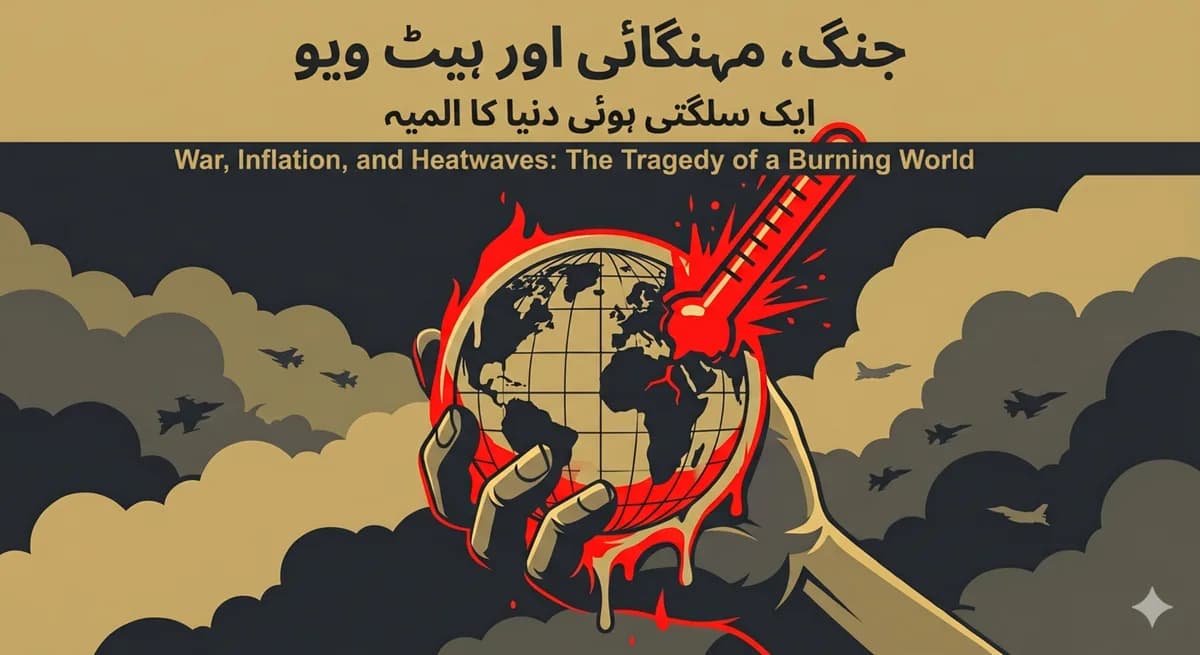
The world seemingly stands at the pinnacle of progress, yet within it breeds a restlessness, an anxiety that puts a question mark on every human achievement. In some places, the flames of war are raging; elsewhere, inflation has made survival miserable for the common man; and in others, the severity of the weather has escalated to such an extent that humans seem terrified of the very environment they have created. These three elements—war, inflation, and heatwaves—are not merely separate issues but links in the same chain that is tightening its grip around humanity.
War has always been a part of human history, but modern-day conflicts are no longer confined to border disputes. These wars destroy economies, shatter societies, and above all, breed fear and insecurity in the human mind. Today, as we observe the ongoing tensions in various regions of the world, it feels as though humanity has been left far behind in the game of power. Every country is busy proving its supremacy, but no one is ready to consider what the end of this race will be.
The first and most direct impact of war falls on the economy. When resources are diverted towards the production of weapons, the basic needs of the public are pushed to the background. This is why a storm of inflation rises alongside war. The surge in oil prices, shortages of food items, and the depreciating value of currency—these are all factors that make the life of a common man miserable. For a person already surviving on a limited income, securing even two square meals a day becomes an arduous task.
In developing countries like Pakistan, the impact of inflation is even more severe. The middle and lower classes here are already under economic pressure, and when global crises occur, the burden falls directly on their shoulders. When the prices of flour, sugar, lentils, and vegetables increase, these are not just statistics; they mean that the stoves in millions of homes go cold. When a mother is unable to provide adequate nutrition to her children, her sorrow is not reflected in any economic report, yet this is the reality that weakens the foundations of a society.
Alongside this, climate change has birthed a new crisis, which we are experiencing in the form of heatwaves. The intensity of the heat is setting new records every year. The rise in temperature is not just a weather update; it is a grave threat to human health, agriculture, and the economy. When the earth's temperature rises, crops are affected, water scarcity emerges, and diseases multiply. During heatwaves, the elderly, children, and vulnerable individuals are the most severely impacted.
The question arises here: is all this merely a natural process, or does human intervention play a role in it? The truth is that industrial progress, relentless deforestation, and environmental pollution have exacerbated this problem. We disrupted nature's balance for our own convenience, and now that very disruption has become a threat to us. Heatwaves are, in fact, a warning that if we do not change our ways, the future could be even harsher.
War, inflation, and heatwaves—these three issues are interconnected. Wars destroy the economy, spawn inflation, and due to the depletion of resources, the pressure on the environment increases. Consequently, climate change intensifies, giving rise to further problems. This is a vicious cycle that is not easy to escape, but it is not impossible either.
In this situation, there is an utmost need to demonstrate seriousness on a global level. The game of power must be abandoned, and peace must be prioritized. Resources should be spent on education, healthcare, and environmental improvement rather than on war. Developed nations must accept their responsibility in mitigating the effects of climate change and assist developing nations.
In the context of Pakistan, we too must reassess our priorities. We need to utilize our resources more efficiently, promote alternative sources of energy, and formulate effective policies to shield the public from the impacts of inflation. Alongside this, we must also bring about a change in our lifestyles. Reducing the wastage of water and electricity, planting trees, and adopting eco-friendly habits are the needs of the hour.
It is also essential to foster a sense of responsibility within society. Every individual must understand that they are both a part of the problem and the solution. If we all take small steps at our respective levels, a massive collective change is possible.
Finally, it would not be out of place to say that the world stands at a critical juncture. If we do not come to our senses now, the time ahead could be even more arduous. Extinguishing the fires of war, halting the storm of inflation, and making the environment safe is not just the responsibility of governments but our shared duty.
This realization is, in fact, the first ray of hope that if humanity wills it, it can rectify its mistakes and lay the foundation for a better, peaceful, and balanced world.